Contact
WhatsApp: +44 7419 360 438
Email: support@supclone.com
24×7 International Customer Support

Patek 5167A Super Clone Review: DDF vs BBF Teardown
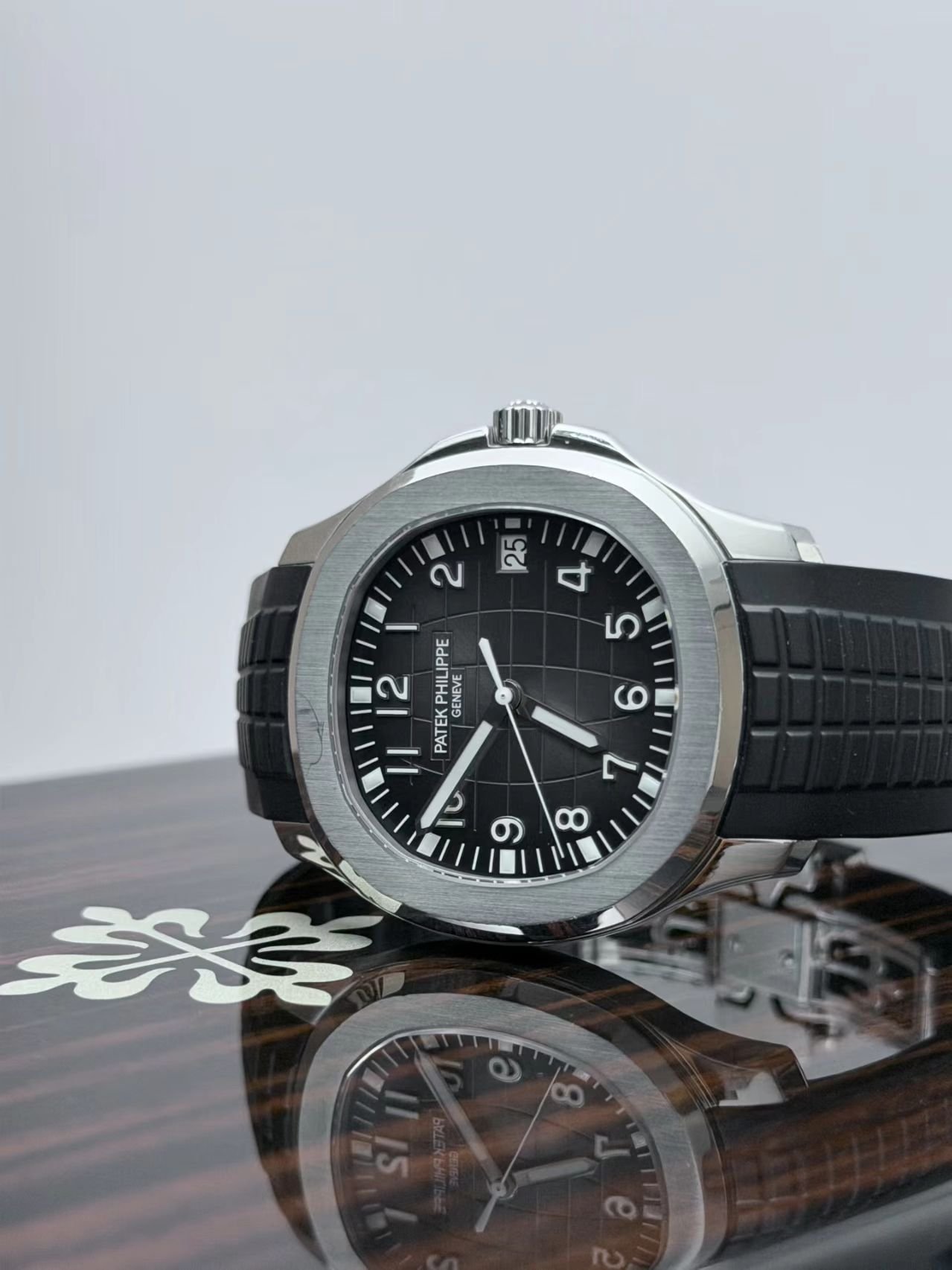
Steel Black Aquanaut Face-Off: DDF vs BBF 5167A Super Clone Breakdown
Forget marketing claims. We put the two reigning Patek Philippe Aquanaut 5167A contenders under macro loupes and calipers to uncover what actually separates them on the wrist.
Atelier Diagnostic Report · Calibre Dandong 330 · Full Tear-Sheet
The Patek Philippe Aquanaut 5167A remains one of the most deceptively difficult luxury sports watches to replicate properly. Because its silhouette is clean and uncluttered, every microscopic imperfection on the rounded-octagonal bezel or dial stands out immediately to a trained eye. In fact, seasoned collectors always check the delicate interplay between the satin bezel and the rubber strap fit.
If you are hunting for the definitive Patek Philippe 5167A Super Clone, the conversation currently centers on two workshop iterations: DDF and BBF. Both claim 1:1 parity with the authentic 40.8mm reference, and both house the upgraded customized Dandong 330 movement. However, when you set them on a precision scale and inspect them under studio macro lighting, the differences in finishing philosophy become unmistakable.
1. Calipers & Scales: The Truth in Millimeters
Genuine 5167A specifications call for a 40.8mm diameter and an ultra-thin 8.1mm case profile, with a total weight ranging between 87g and 93g. Therefore, even a fraction of a millimeter can alter the slim character of this luxury sports watch.
DDF Bench Measurement
Weight: 90.0g (Untrimmed strap)
Diameter: 40.8mm (True to gen)
Thickness: 8.3mm (+0.2mm variance)
BBF Bench Measurement
Weight: 90.8g (Untrimmed strap)
Diameter: 40.8mm (True to gen)
Thickness: 7.9mm (-0.2mm variance)
In terms of weight, both factories stay well within realistic genuine tolerances. On thickness, however, BBF is 0.2mm thinner than genuine, while DDF sits 0.2mm thicker. Consequently, BBF’s caseback transition curve and slightly shallower bezel give it a slightly flatter stance on the wrist.
2. Dial Texture: Sunburst Depth vs. 3D Relief
The embossed checkerboard dial is the defining feature of the Aquanaut. Genuine dials carry a subtle dome where the grid pattern softens naturally toward the outer minute track. Meanwhile, each factory approaches this texture with a different emphasis:
Satin Brushing and Sunburst Reflections
DDF takes a clear lead in dial finishing. In fact, its satin sunburst is silky, fine-grained, and transitions smoothly between deep anthracite and jet black. In contrast, BBF’s sunburst is noticeably coarser under direct studio lighting. As a result, the BBF dial appears somewhat flat, lacking the optical depth that makes genuine Patek dials so captivating.
Typography, Numerals, and Lume Plots
However, BBF strikes back when inspecting macro lettering. For example, its logo printing is sharp, raised, and crisp. DDF’s logo printing carries a faint lacquer halo under 10x magnification. On the other hand, BBF features convex and glossy outer lume plots, whereas DDF’s lume dots are relatively flat and matte white.
Dial Summary:
If you prioritize organic, silky light reflection under everyday office lighting, DDF feels closer to genuine. Conversely, if you prioritize three-dimensional hour markers and lume fullness, BBF holds the aesthetic edge.
3. Strap & Clasp: Where DDF Completely Dominates
This is where the head-to-head ceases to be a close match. For serious collectors and authentication appraisers, the folding double-catch clasp is the ultimate test of any Patek Aquanaut replica.
DDF: One-Piece Milled Clasp
CNC-machined from a single solid piece of steel. Furthermore, the internal scissor arms are seamlessly integrated, matching authentic construction. The tail exhibits the classic slim, beveled “hook” profile that snaps cleanly against the wrist.
BBF: Spot-Welded Clasp (Flaw)
BBF chose an unfortunate manufacturing shortcut. Specifically, their clasp arms are assembled using four-corner spot welding. Turn the clasp over in good light, and you can clearly see the tiny weld burn marks. The tail is thick, blunt, and unhooked.
Therefore, in terms of daily wear and long-term durability, DDF’s one-piece construction is decisively superior. You never have to worry about spot-weld fatigue after repeated opening and closing. In addition, you avoid an immediate telltale flaw when someone inspects the underside of your wrist.
4. Calibre 330 Performance & Date Mechanics
Both builds have fortunately moved past older decorated Miyota 9015 movements. Instead, both DDF and BBF now utilize the customized Dandong 330 clone movement, providing a hacking seconds function and realistic bridge geometry.
Exhibition Caseback Engraving
Through the sapphire caseback, BBF’s golden rotor engraving and bridge text are slightly finer and cleaner. DDF’s gold infill is slightly bolder and deeper. Nevertheless, both calibres showcase respectable mechanical decoration for daily appreciation.
Instantaneous Midnight Date Jump
Regarding calendar function, both models begin gear engagement around 11:15 PM and snap cleanly over right at midnight. Unlike older 324 clone versions that dragged the date slowly for two hours, these Dandong 330 movements flip with decisive, satisfying action.
5. The Bench Verdict: Which One Belongs in Your Watch Box?
Why DDF Is the Safer, Smarter Long-Term Choice
If you evaluated these watches exclusively from the front under a loupe, BBF makes a tempting case with its raised lume plots.
However, in the world of high-end super clones, structural integrity always trumps minor dial differences. The spot-welded clasp on the BBF is a visible flaw that compromises long-term reliability. In contrast, DDF’s authentic one-piece clasp, combined with its silky sunburst dial, makes it the more durable and convincing 5167A package on the market today.
Looking to Source a Regulated 5167A Aquanaut?
Every Patek Philippe piece curated by Supclone undergoes 6-position timegrapher regulation, clasp tension audits, and 4K macro video review before dispatch.
Ask Our Concierge on WhatsApp: +44 7419 360438