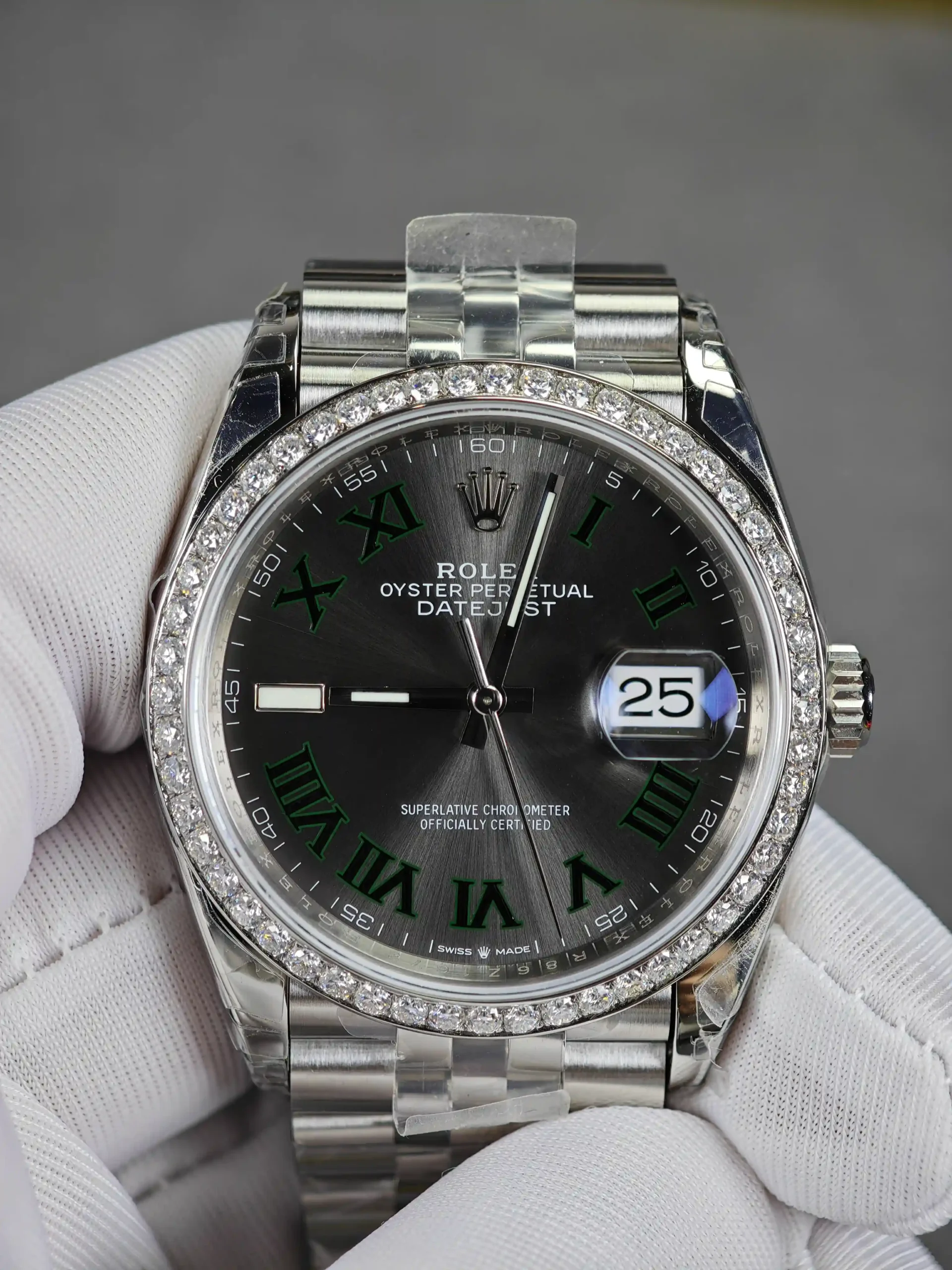
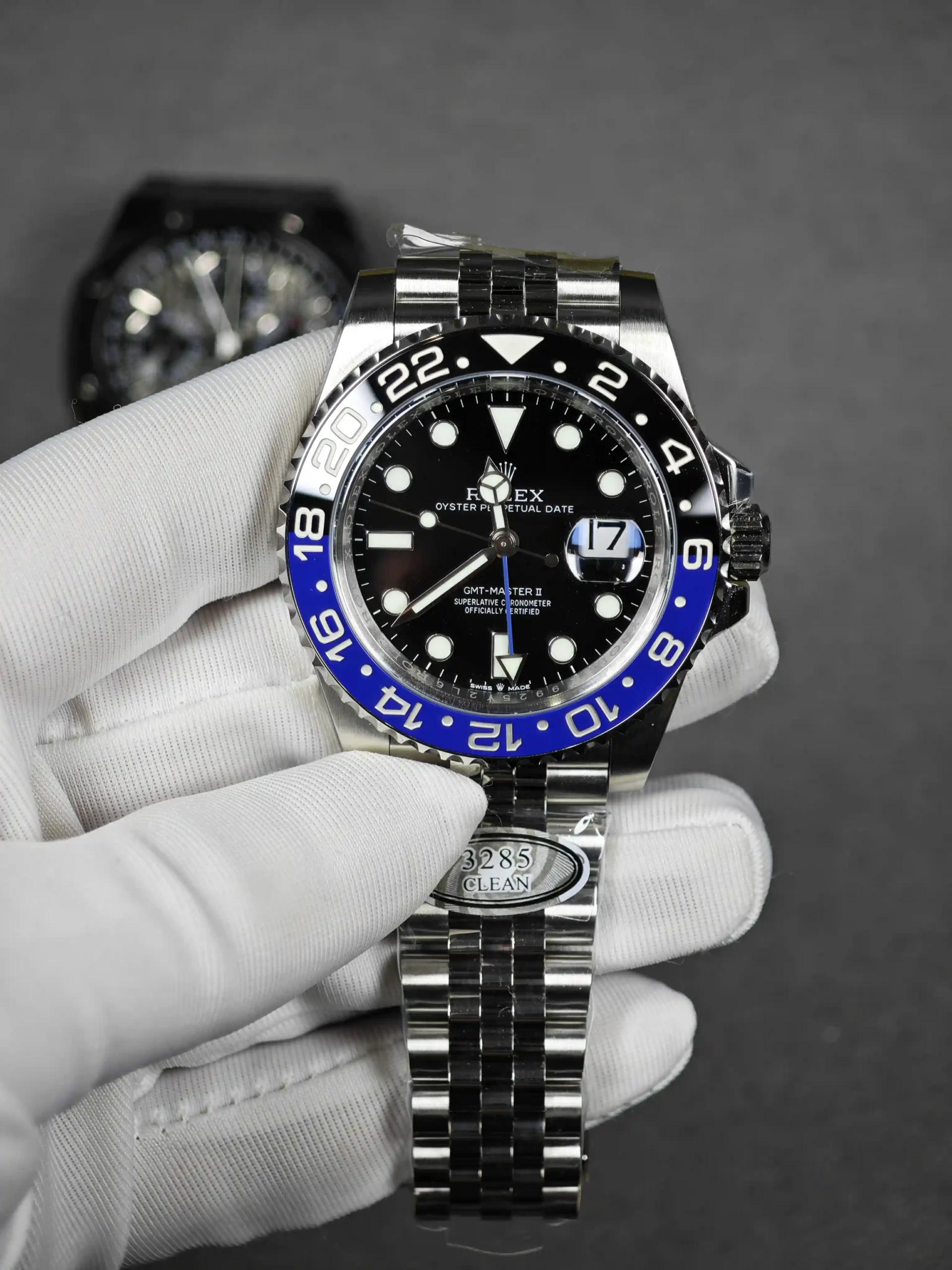
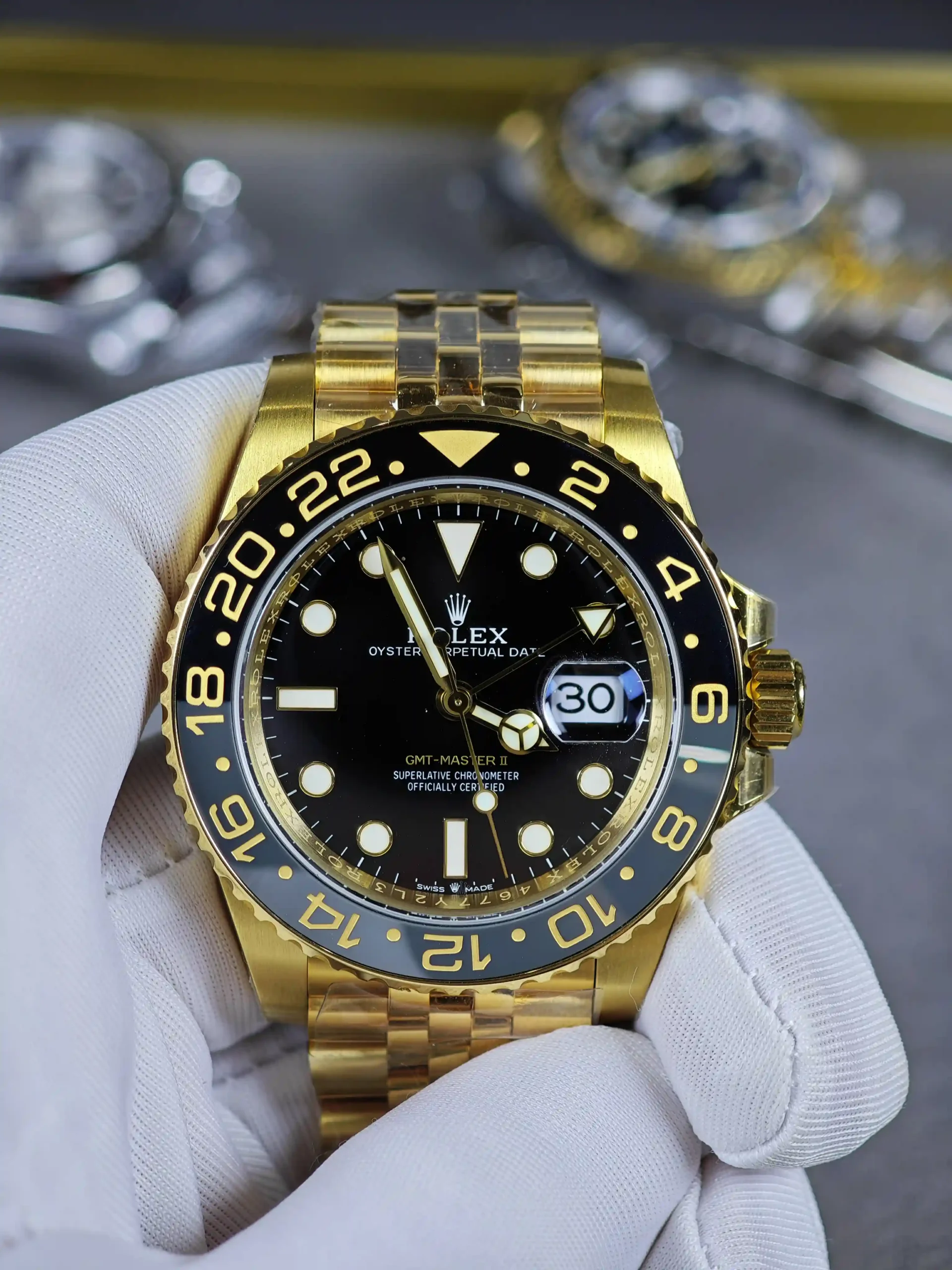
01 · MovementThe movement is where the money goes
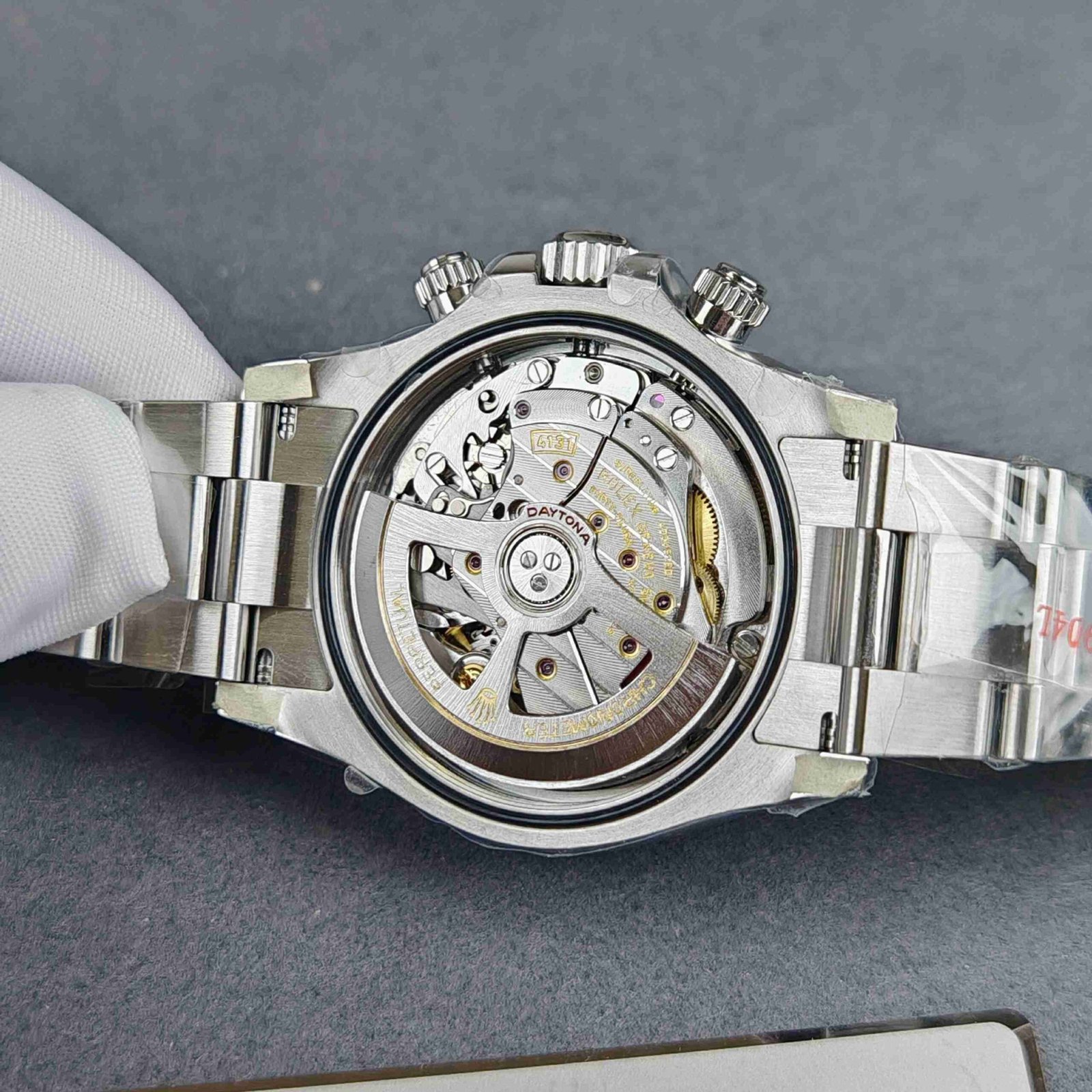
A cheap fake runs a standard 2824 or 7750 with a decorative plate glued on top. It looks
busy through a display back and does nothing. A real super clone runs an integrated caliber
built from the ground up to match the original gear train, winding feel, and crown logic.
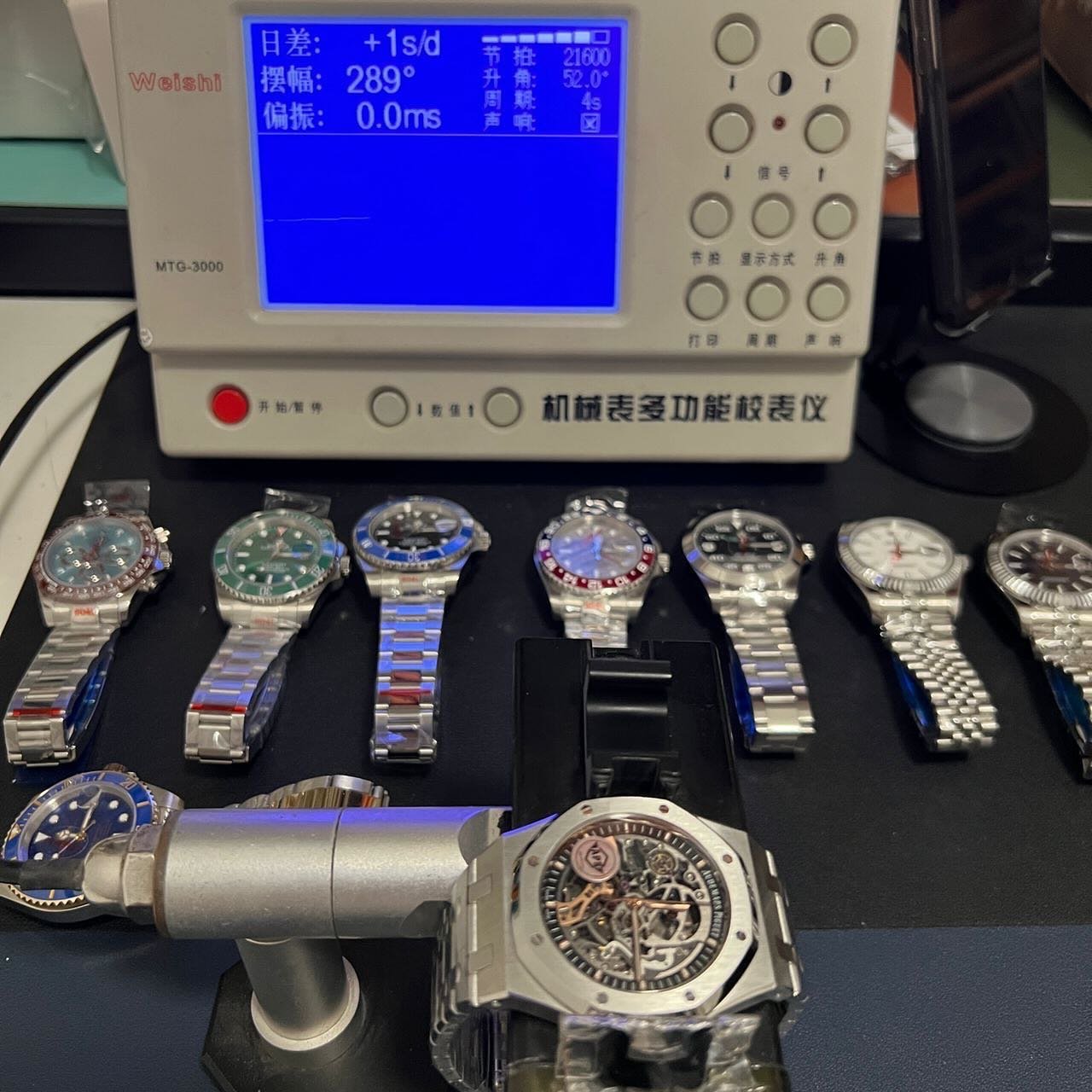
What to check: beat rate should be 28,800 vph (4Hz). Jewels between 27 and 31. Power
reserve 70 to 72 hours on the modern references. Beat error under 0.2ms. Daily rate
within ±5 seconds. Hacking seconds. Instant date change at midnight, not a slow drag.
- 28,800 vph beat rate — smooth sweeping seconds, not a stutter
- 27–31 jewels, bidirectional automatic winding
- 70–72 hour power reserve on 32xx and 41xx calibers
- Hacking seconds and instant date change
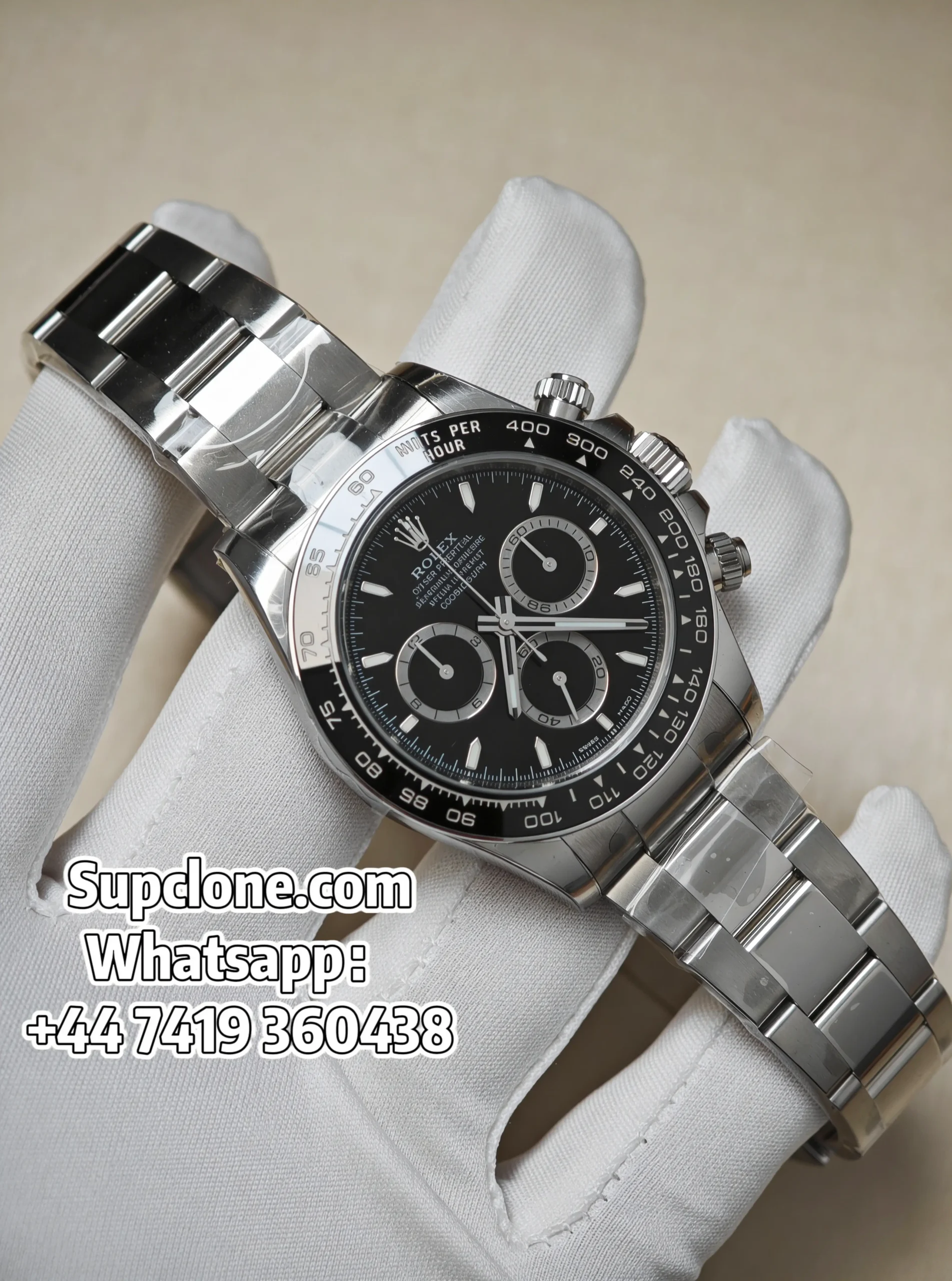
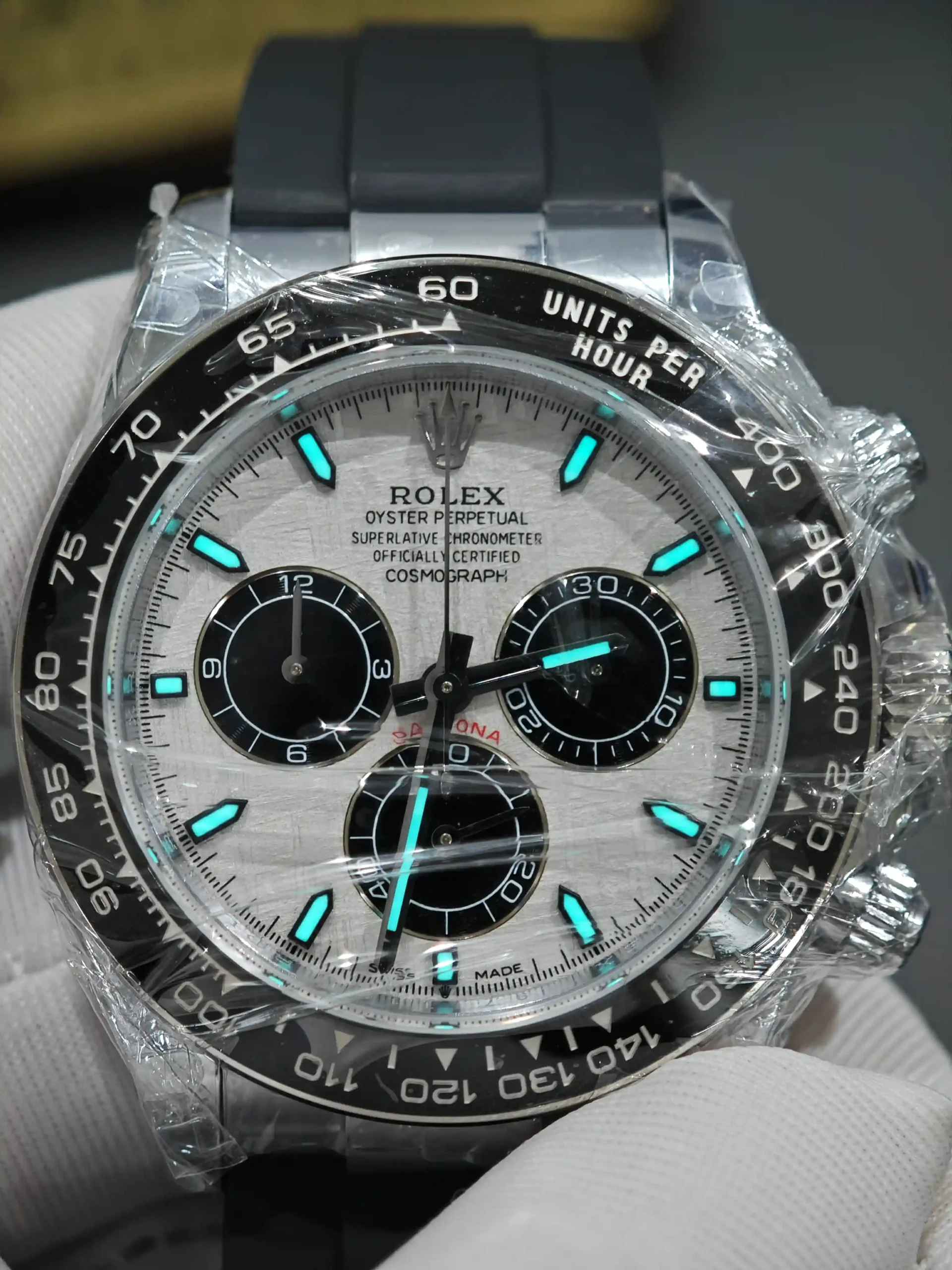
- Column wheel chronograph on Daytona references
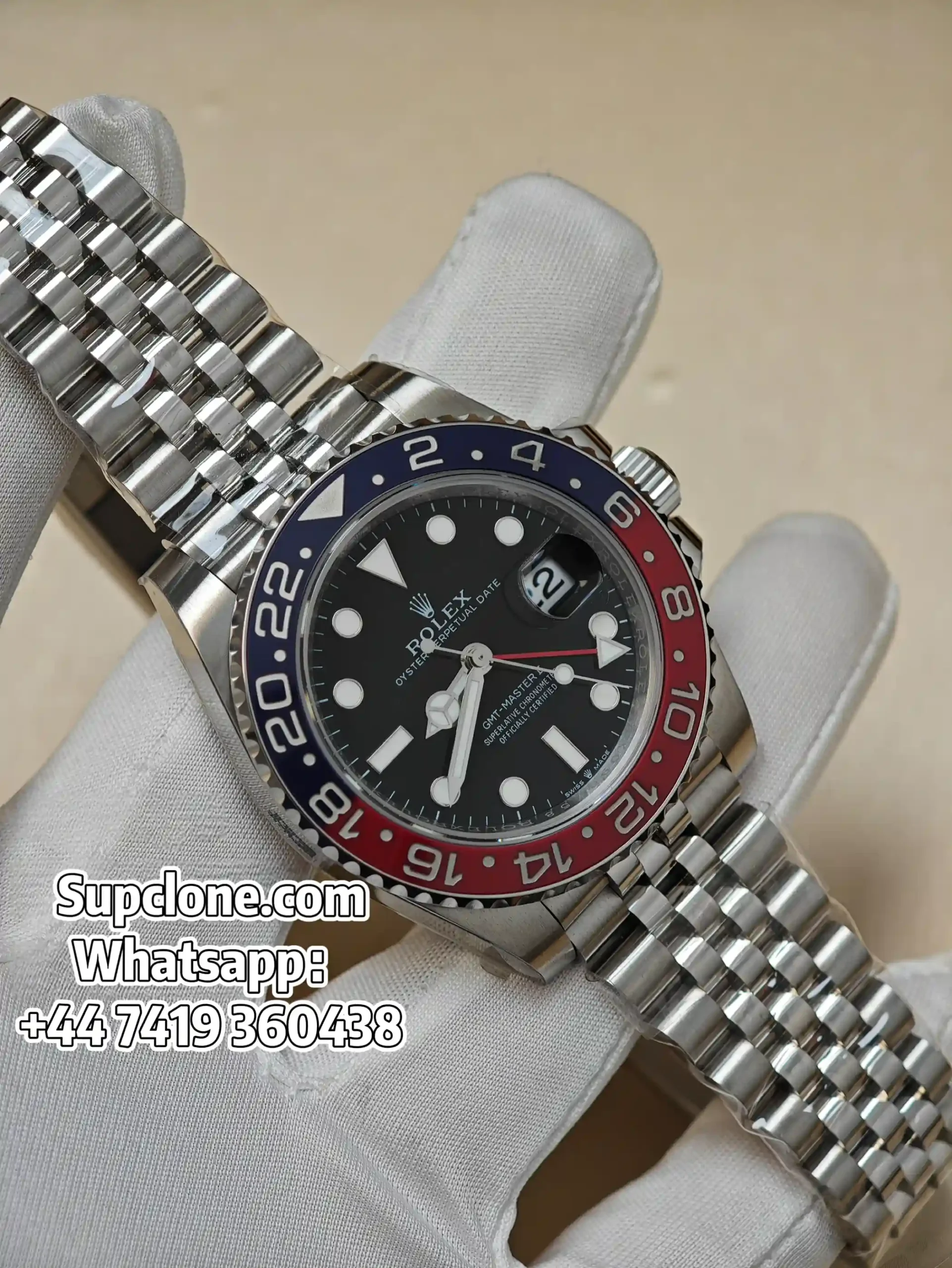
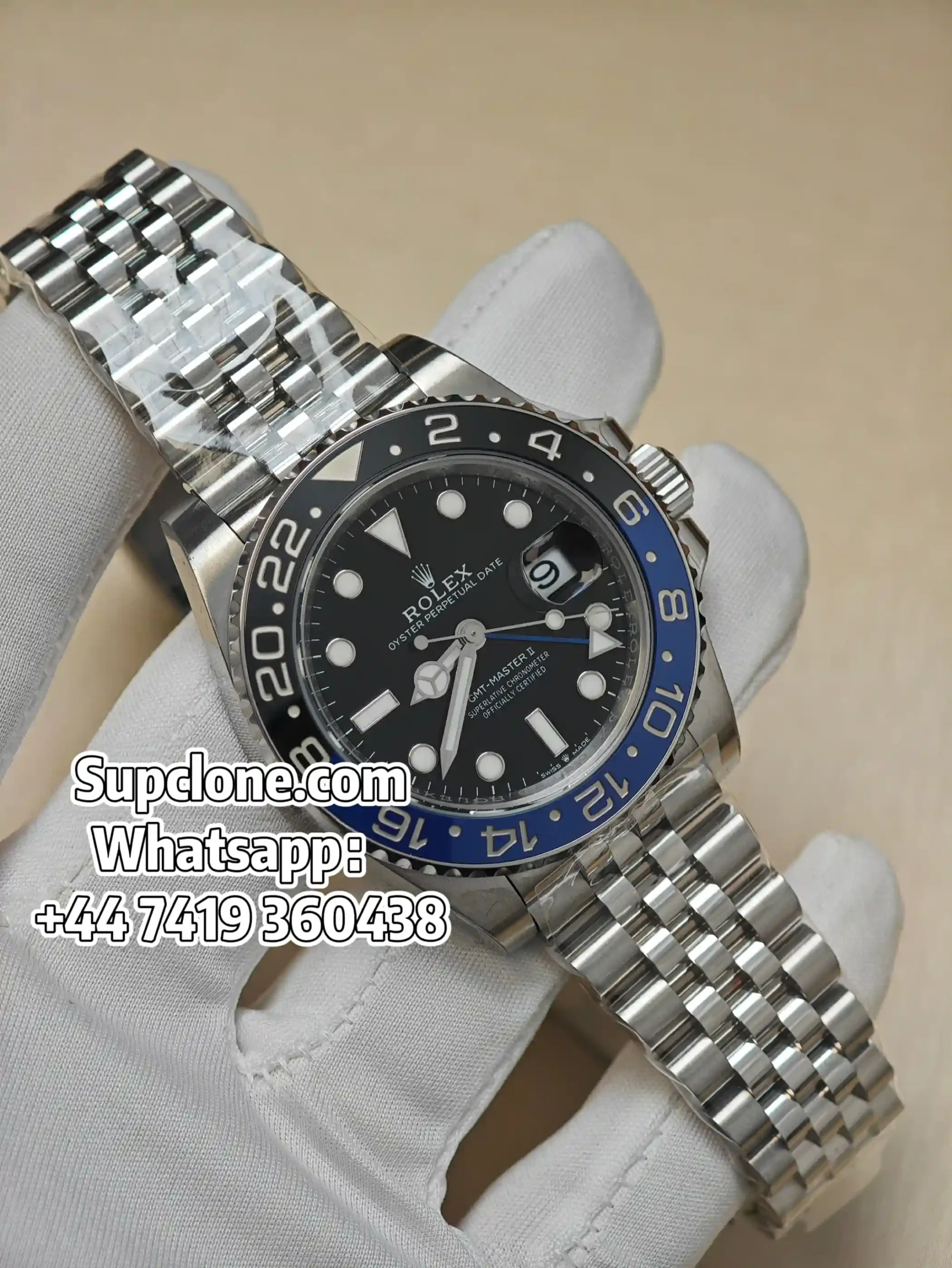
- True jumping hour hand on GMT references
02 · CaseCase and metallurgy
Baseline is 316L stainless steel. A proper super clone uses 904L — the same austenitic
alloy the genuine uses. It costs more, machines harder, and gives a warmer mirror luster.
You can feel the difference when you pick it up.
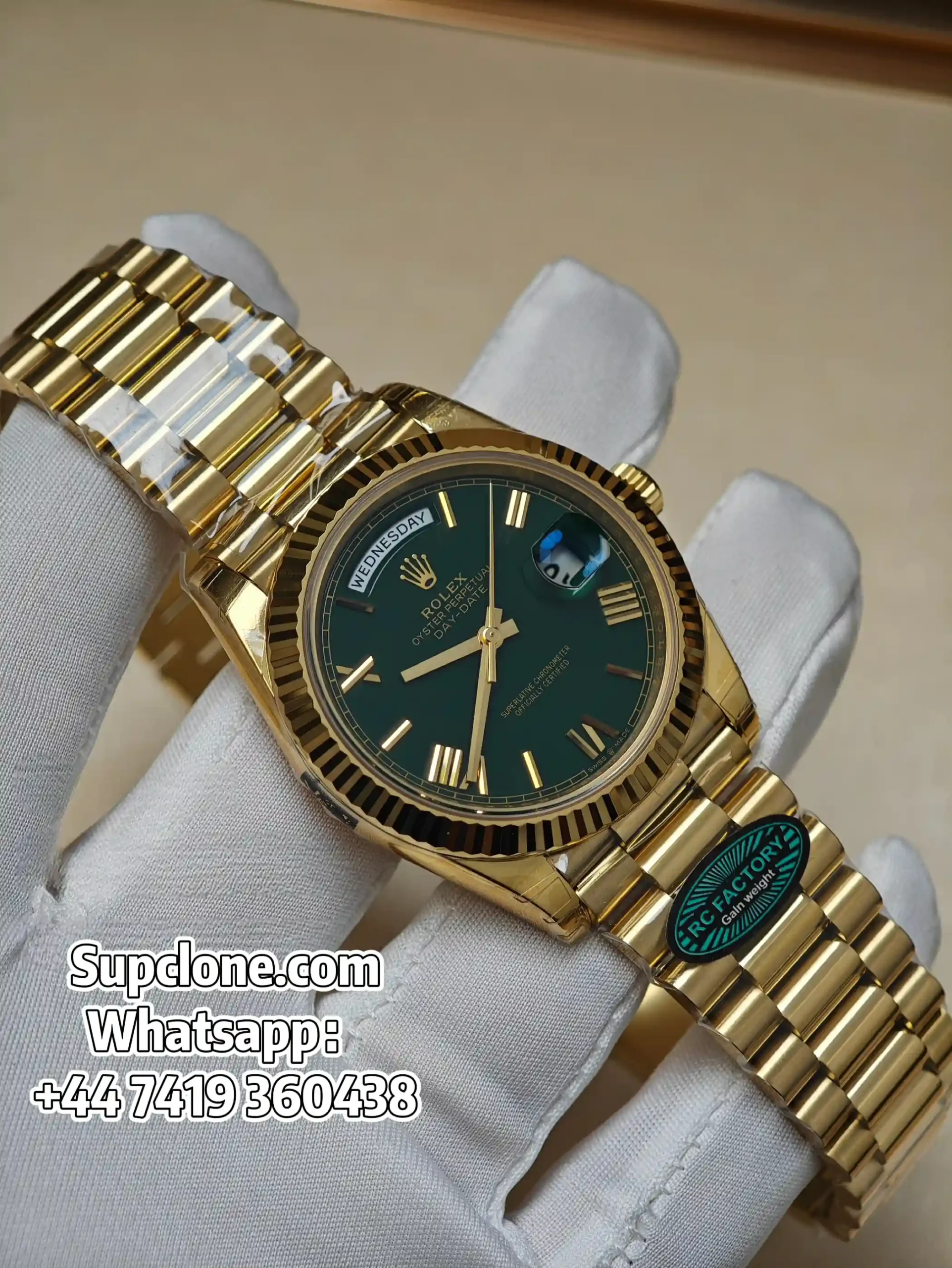
Precious metal references use tungsten cores to match the weight of solid gold. A yellow
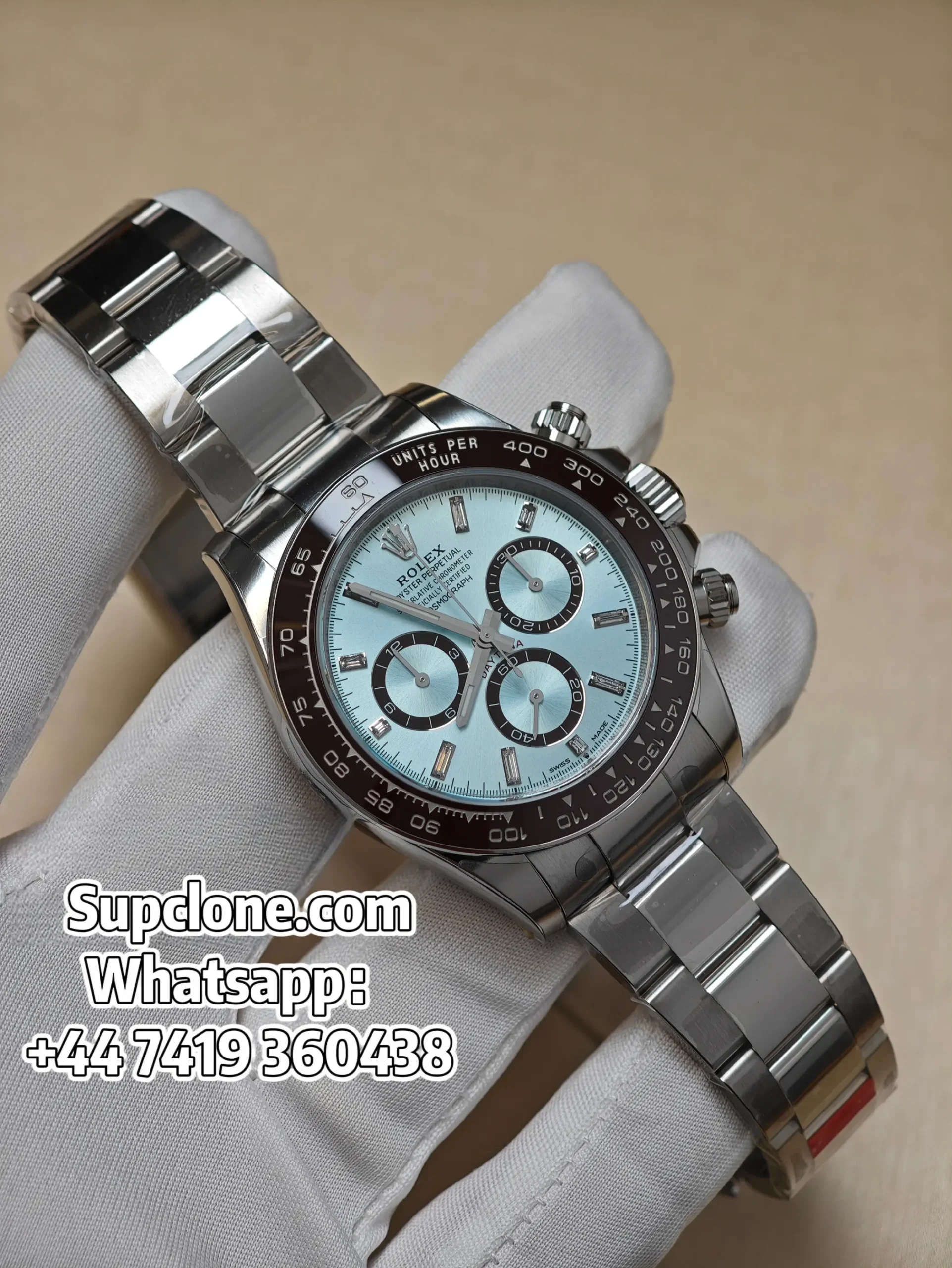
gold Day-Date should hit around 207g. A white gold Daytona around 176g. If a "gold" watch
feels like 140g, it's a steel case with gold plating.
- 904L austenitic steel on modern references
- Tungsten-weighted cores on precious metal models
- Case thickness within 0.1mm of genuine
- Hand-polished chamfers, directional satin brush on lugs
- Correct crown guard profile and tube threads
03 · DialDial printing and index work
This is where cheap watches fall apart under a loupe. Text should be crisp, correctly
spaced, and printed at the right depth. The coronet at 12 should sit dead center. Index
rings should be polished, not painted.
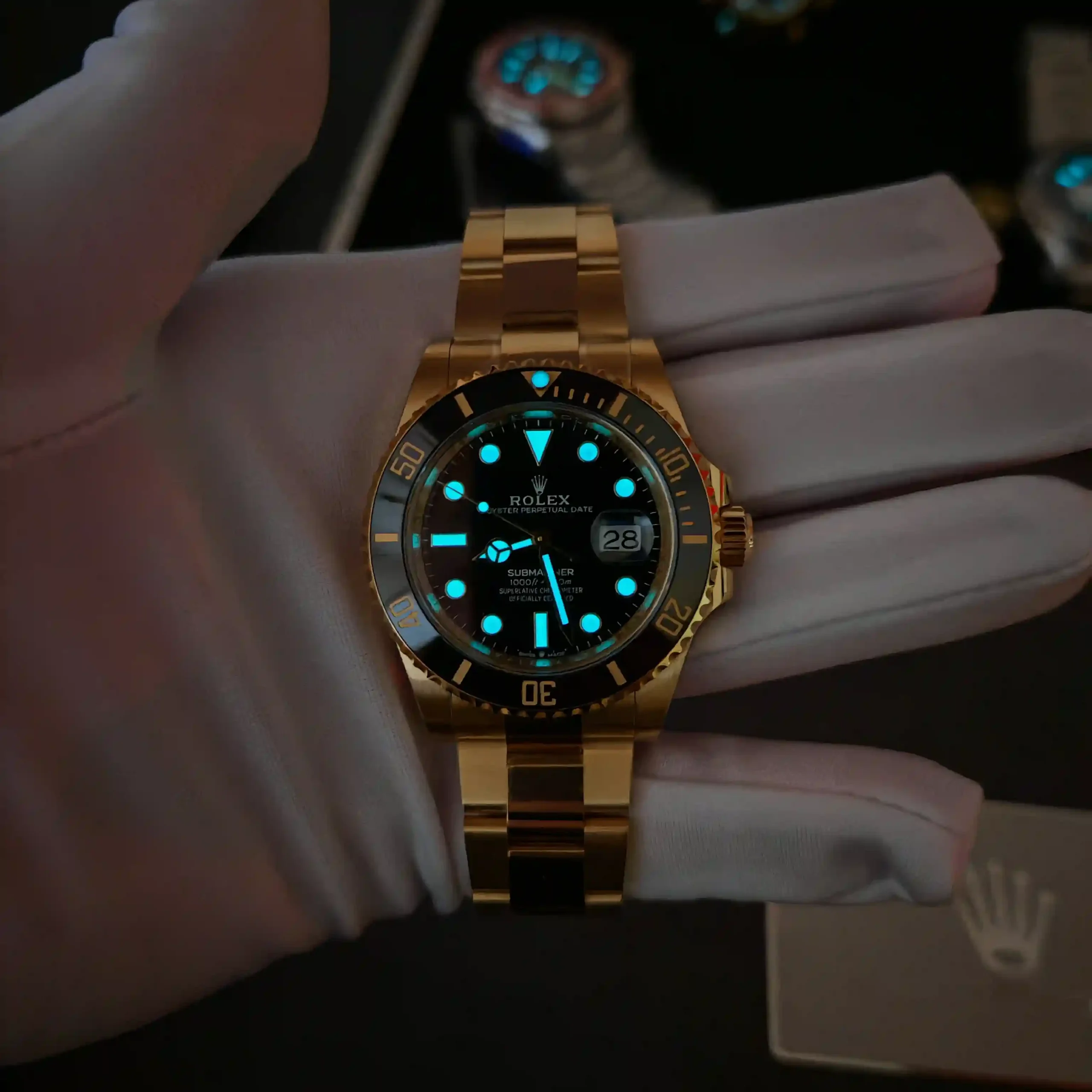
Lume is another tell. Cheap watches use uneven, chalky lume that fades in an hour. Good
super clones use Swiss-grade pigment filled by hand to an even depth. Charge it under a
lamp for 30 seconds and it should still be readable at 4am.
- Correct dial texture: sunburst, matte, or lacquer
- Applied indices with polished surrounds
- Hand-filled lume, even depth, no overflow
- Date wheel font and magnification correct
- Rehaut engraving aligned with minute track
04 · BezelCeramic bezel and insert
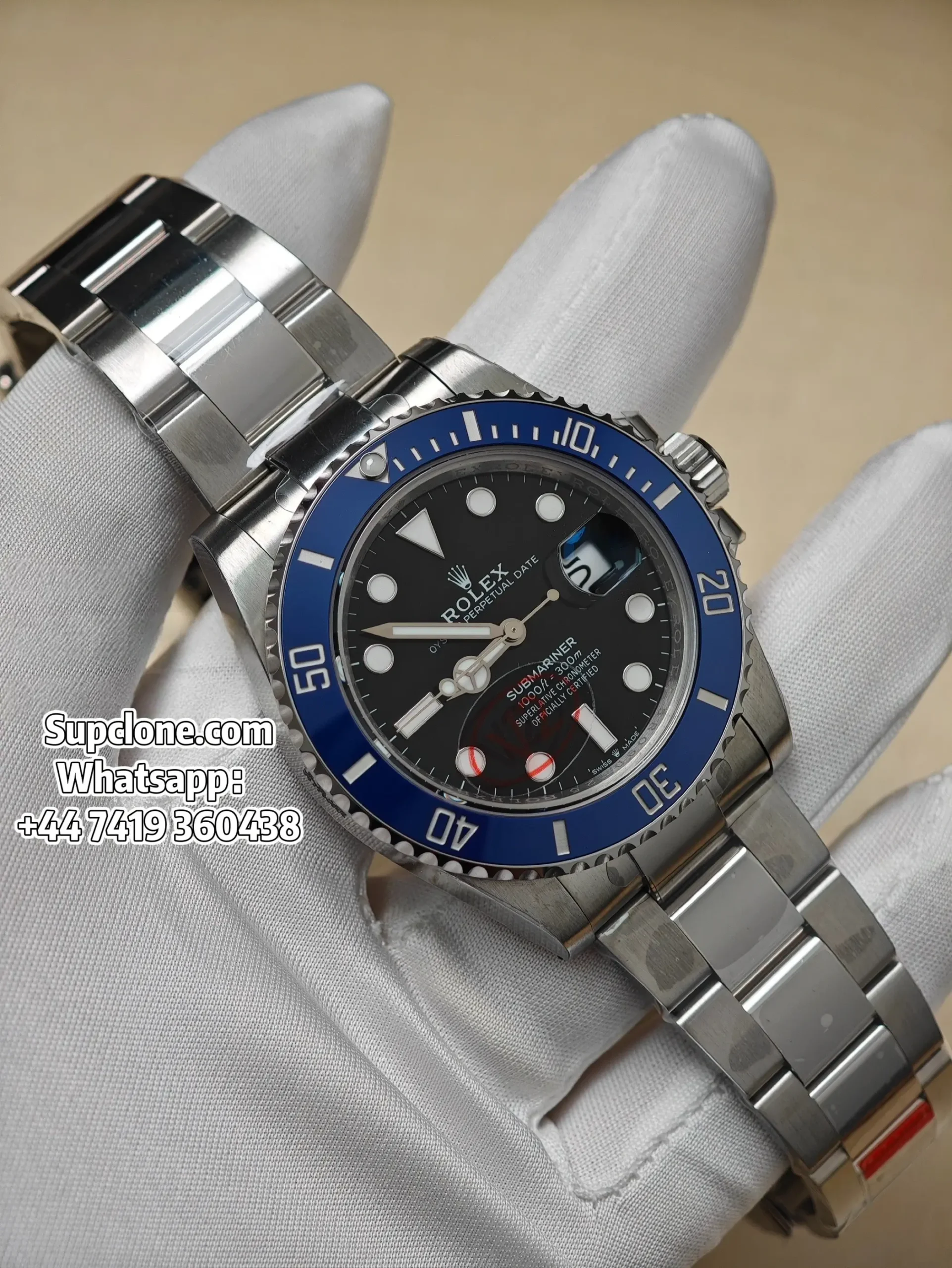
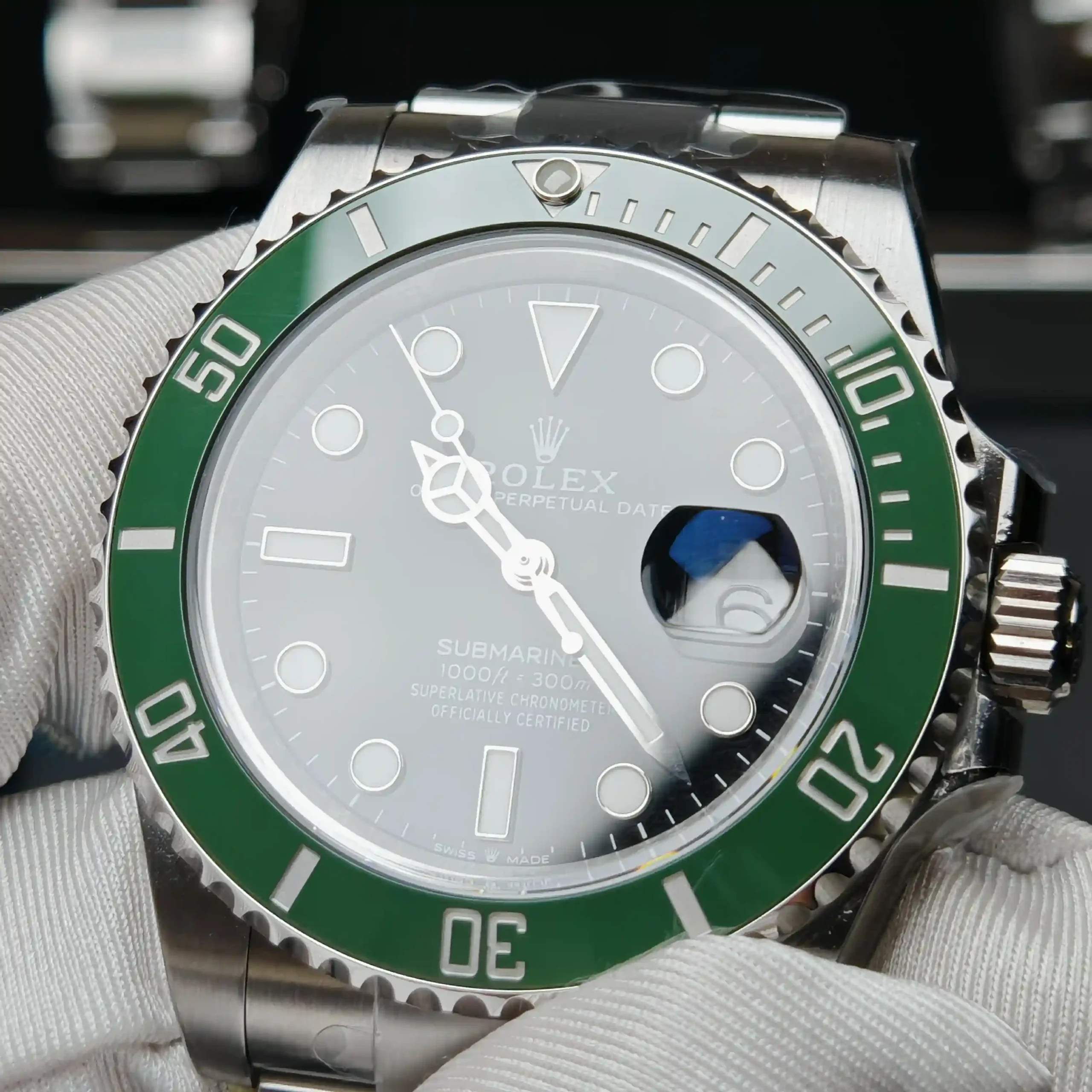
Genuine ceramic bezels are sintered at high temperature, which makes the color permanent.
Cheap replicas use painted enamel that fades grey within a year. A super clone uses a
sintered ceramic insert with platinum PVD-dusted numerals, not white paint.
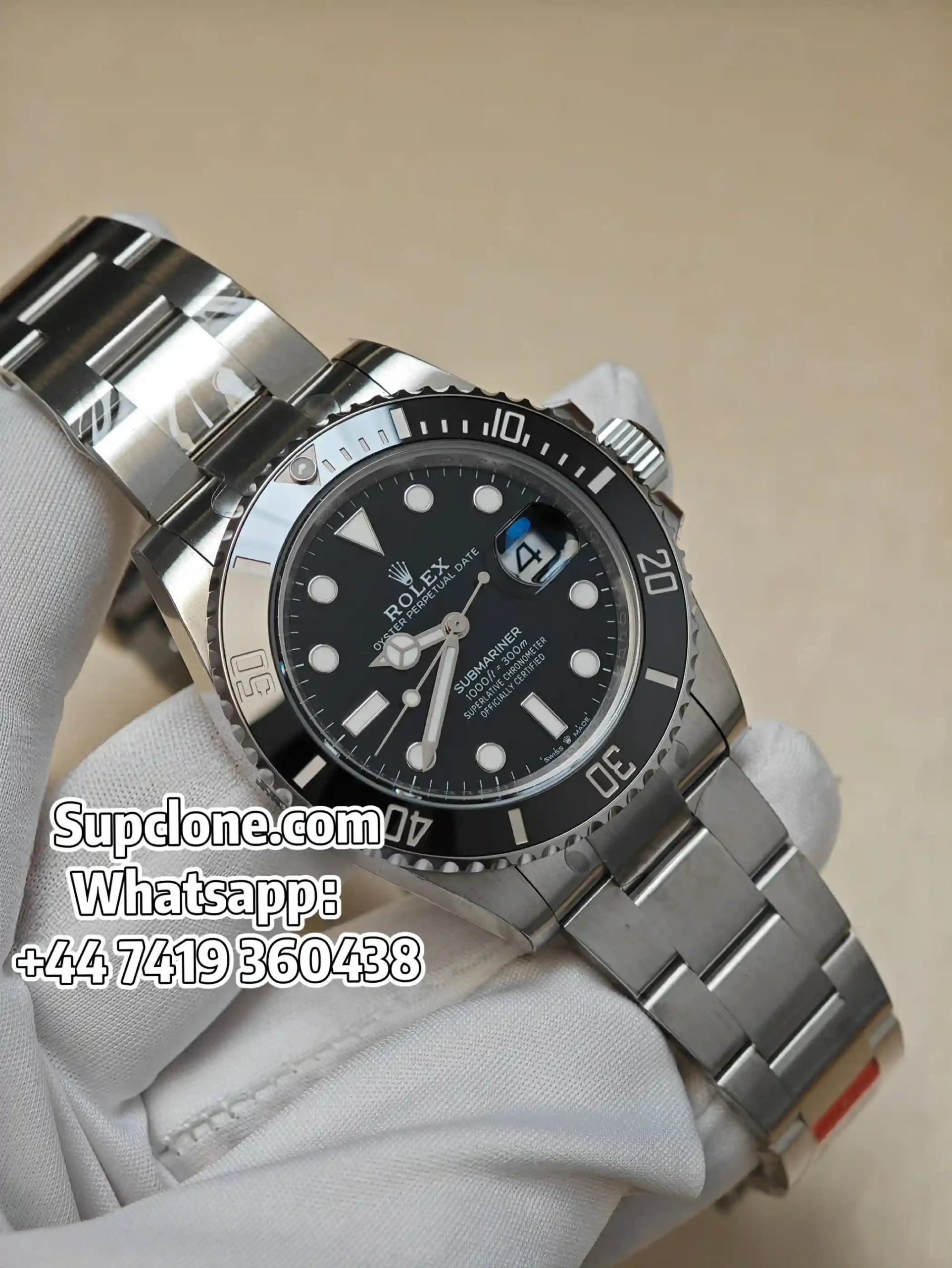
On a Submariner, the bezel should rotate with 120 distinct clicks, no backplay, no
wobble. On a GMT-Master II, the two-tone insert should show a clean seam between colors
with no bleed.
- Sintered ceramic insert, fade-proof color
- Platinum PVD numerals, not enamel paint
- 120-click unidirectional rotation, no backplay
- Clean two-tone seam on Pepsi and Batgirl inserts
05 · CrystalCrystal and AR coating
Sapphire crystal is standard on anything worth buying. The difference is the anti-reflective
coating. Genuine Rolex uses a colorless double AR undercoat that produces the "black hole"
effect over the date window — the cyclops disappears into the dial at certain angles.
Cheap watches use a blue-tinted AR that makes the dial look hazy under sunlight. Good
super clones use colorless coating on both sides of the crystal, and the cyclops is
properly aligned and magnified.
- Double-domed sapphire, Mohs 9 hardness
- Colorless double AR undercoating
- Black-hole effect over the date window
- Cyclops magnification 2.5x, correctly aligned
06 · BraceletBracelet and clasp
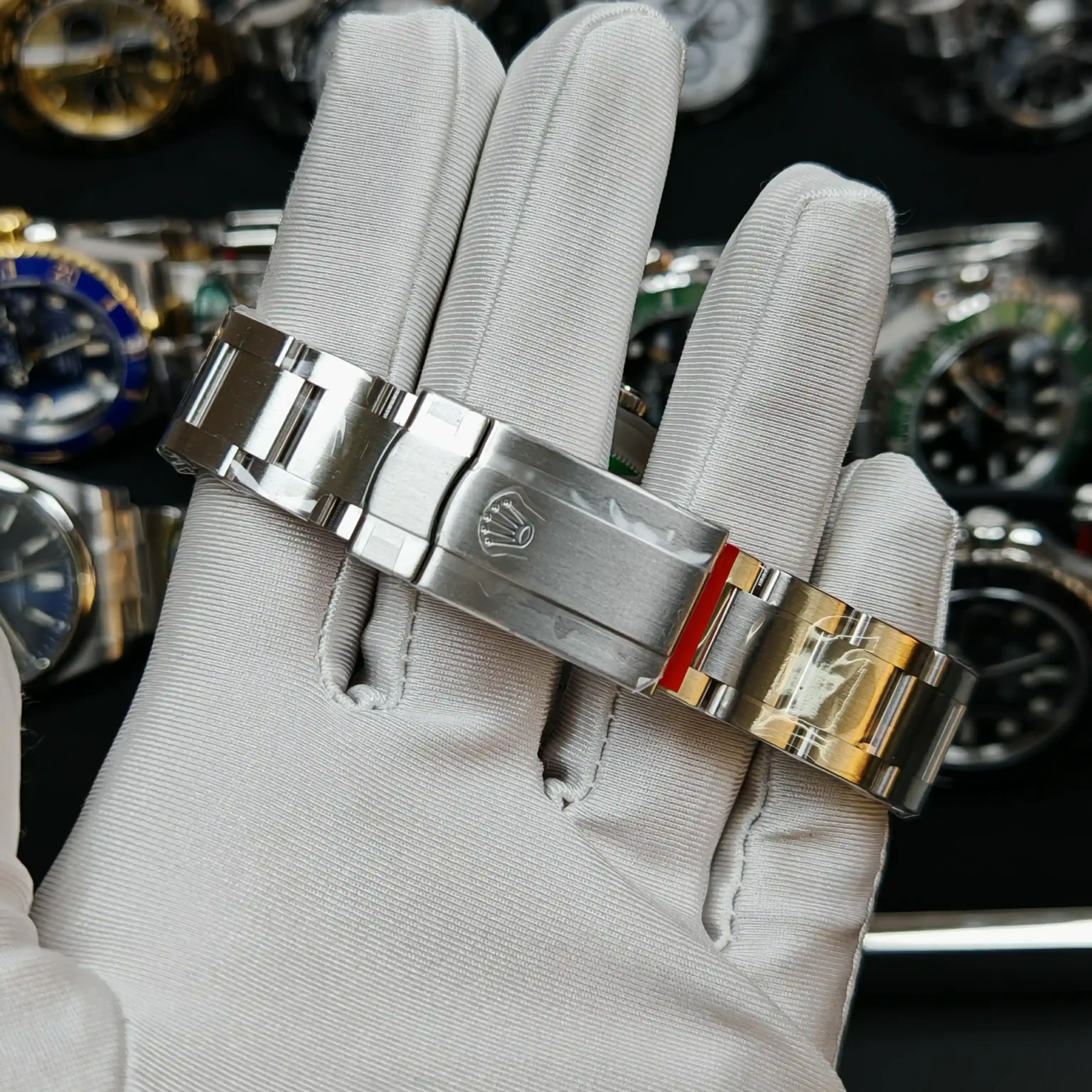
This is the part you touch most. Cheap bracelets rattle, have sharp edges, and use folded
end links that don't sit flush. A super clone uses solid end links, correct link
geometry, and a clasp that snaps shut with the right tension.
On a Submariner, the Glidelock clasp should slide smoothly through its micro-adjust
range. On a Jubilee, the center links should be polished while the outer links are
brushed. On an Oyster, all links brush in the same direction.
- Solid end links, flush fit to case
- Correct link geometry and taper
- Brushed and polished surfaces in the right places
- Functional micro-adjust clasp
- Signed clasp with correct coronet depth
07 · FinishingCase finishing and hand work
CNC machining gets you 90% there. The last 10% is hand work — polishing the chamfers,
brushing the lugs in the right direction, deburring the crown guards. This is what
separates a $200 fake from a $1,000 super clone.
Run your finger along the case flank. It should feel smooth, not sharp. Tilt it under
light — the transition from brushed to polished should be a crisp line, not a smeared
gradient.
- Hand-polished chamfers on case flanks
- Directional satin brush on lug tops
- Deburred crown guards
- Crisp brushed-to-polished transitions
08 · Water resistanceWater resistance and sealing
A super clone should hold 100m minimum. Dive references should hold 300m. This is
achieved with proper gaskets — caseback O-ring, crown tube gaskets, crystal gasket,
and helium escape valve on Sea-Dweller references.
Every unit we ship is pressure-tested before dispatch. If it doesn't hold, it doesn't
leave the bench. This is not something a drop-shipper can guarantee.
- 100m minimum, 300m on dive references
- Caseback O-ring, crown tube gaskets, crystal gasket
- Pressure-tested before dispatch
- Helium escape valve on Sea-Dweller models